Most of the people i talk to about AI are engineers, developers, people working in IT. This time i was standing in front of a room full of political science students at Varendra University, trying very hard not to turn the whole thing into an engineering lecture.
This was a different visit from the workshop i wrote about in June 2025, which was with the department’s faculty. This time, the students were the audience.
Political science is a subject i have a keen interest in, even though my day job has very little to do with it. So there was plenty to talk about. The challenge was deciding what would actually be useful to them.
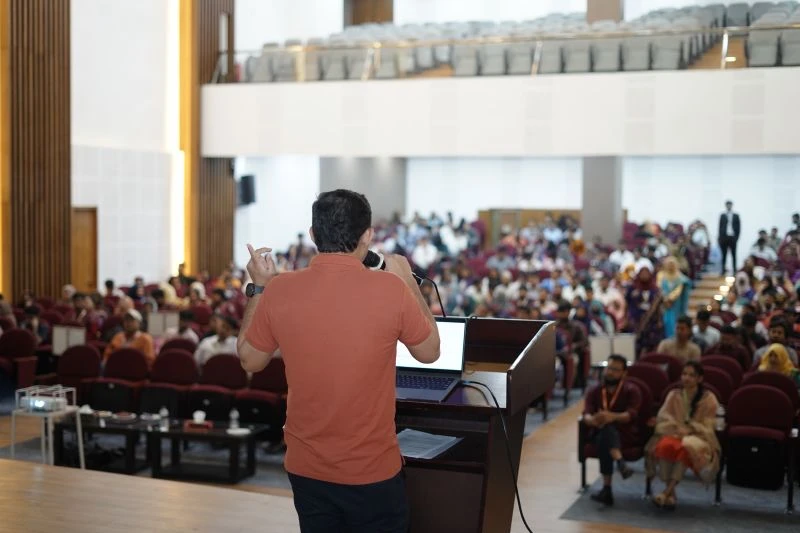
A different audience
You don’t need to write software to have a use for AI. You might be trying to understand how a government works, why a policy has different effects on different groups, or how the parts of a society influence each other. These are complex topics. Getting a paragraph that sounds reasonable is not the same as understanding one.
So the focus was on using AI to explore and learn. Taking something complicated and finding a way into it, asking better questions, then going further instead of stopping at the first answer.
For someone studying political science, the useful part isn’t how the model was deployed. Its whether it helps you understand the subject you’re studying. The engineering can wait.
Asking better questions
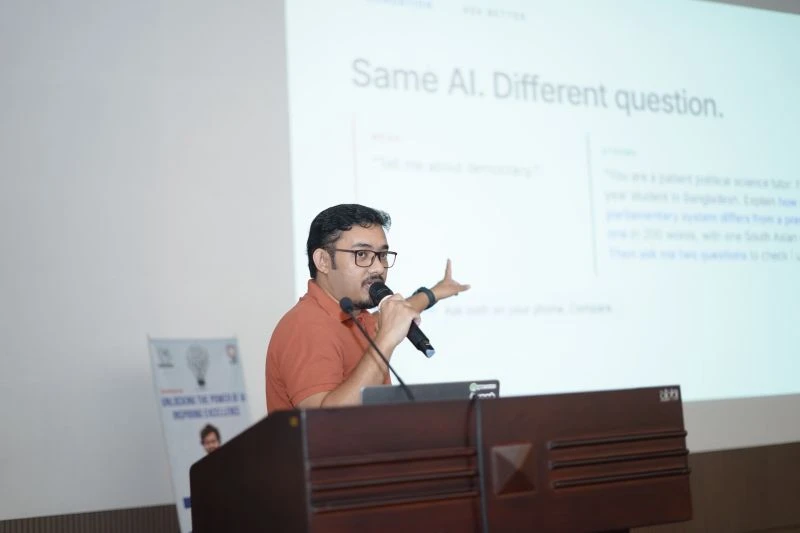
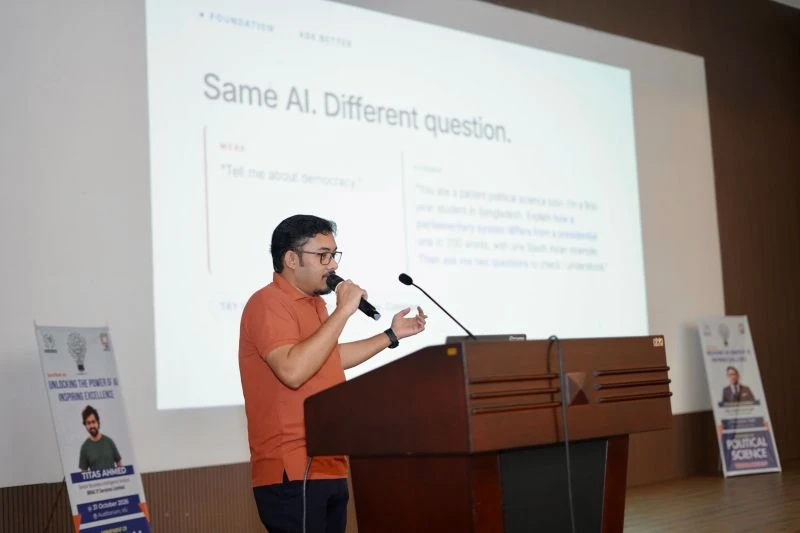
A slide from the session says, “Same AI. Different question.” That gets quite close to the point.
There is a difference between asking for a summary and asking for help understanding something. A summary can give you the words without giving you much understanding. You still need to work through the assumptions, the competing explanations, and the parts that don’t make sense to you.
AI gives you another way to do that. You can ask for an explanation, ask it to approach the topic differently, and keep asking until you can explain it yourself. You also need to check what it tells you. An answer being easy to read doesn’t make it right.
That opportunity to explore a subject is useful well beyond engineering. It was what i wanted to focus on with this audience.
A digital version of you
i also previewed a concept i have been experimenting with: a fact checked, human reviewed digital version of yourself.
The fact checking and human review are important parts of that sentence. If something is going to represent you, the information it uses needs to be checked by you. A convincing answer about your life or your views is not enough if you never said it.
It is still something i am experimenting with, not a finished product announcement. But it was a useful idea to bring into a discussion about what people outside tech can do with AI.
Thank you
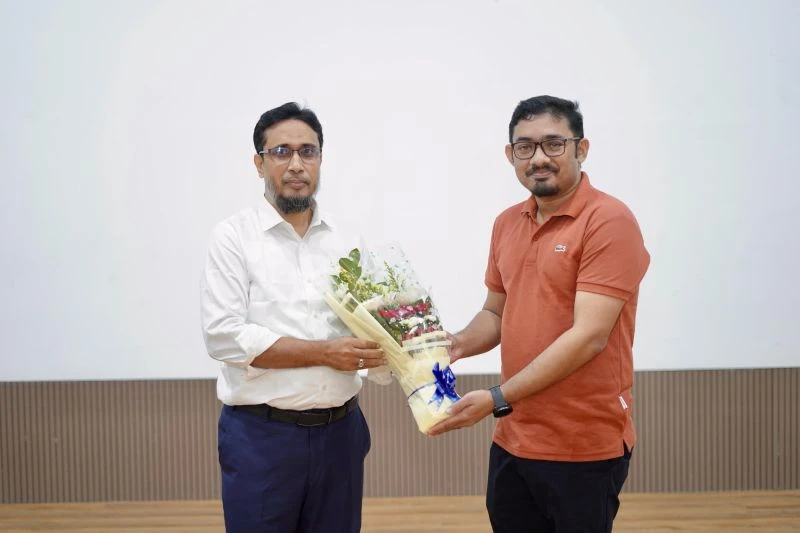
A special thanks to the Department of Political Science at Varendra University for inviting me back, and to the students for sitting through a lecture by an engineer desperately trying not to be too technical.
It was good to talk about AI without making the whole conversation about writing more code.